Meet the Coral Honeysuckle
Coral Honeysuckle | Lonicera sempervirens
How do you know it’s me?:
I am a twining, perennial vine.
I am evergreen in the warmer end of my range (typically zone 8 and higher).
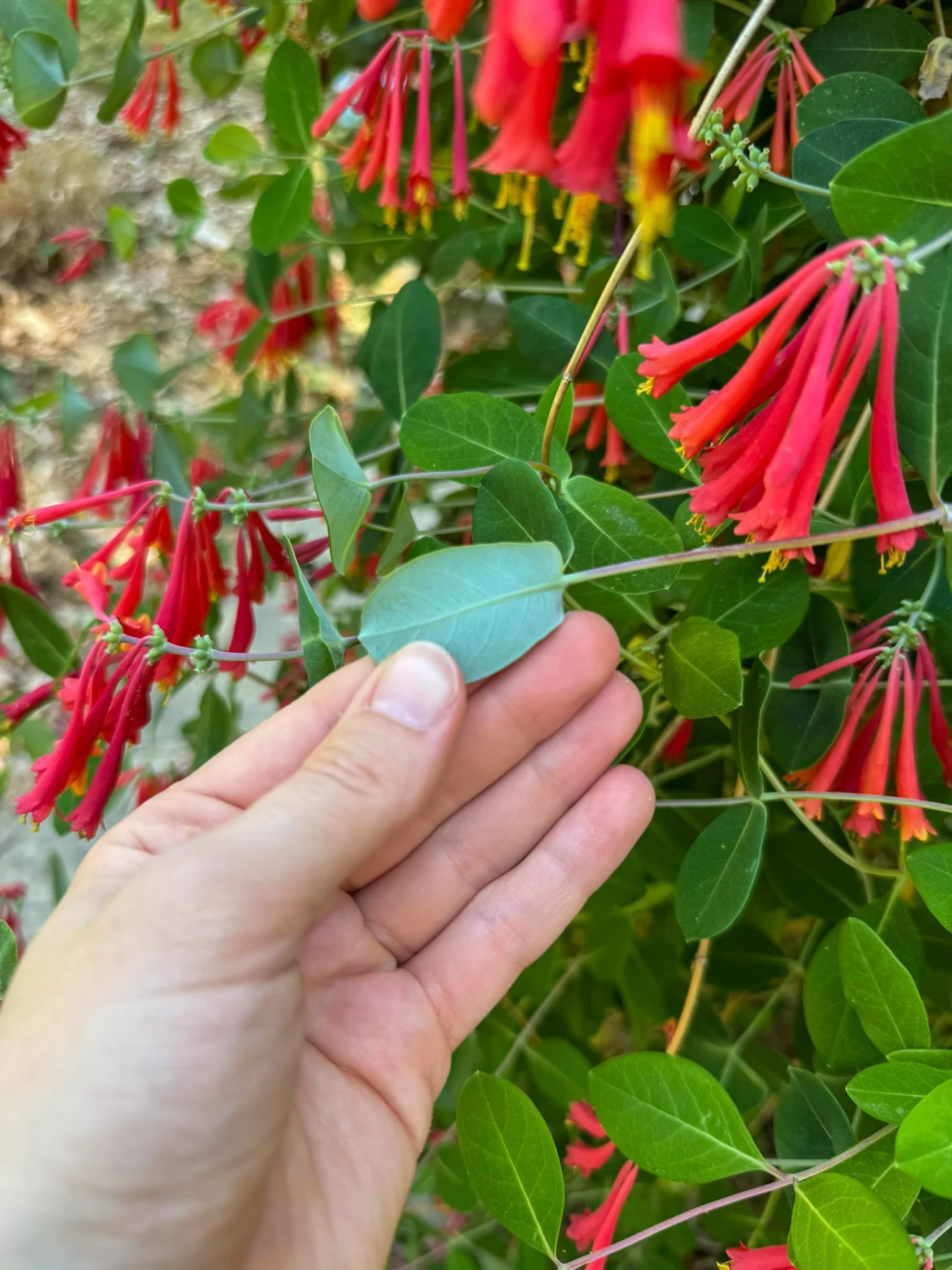
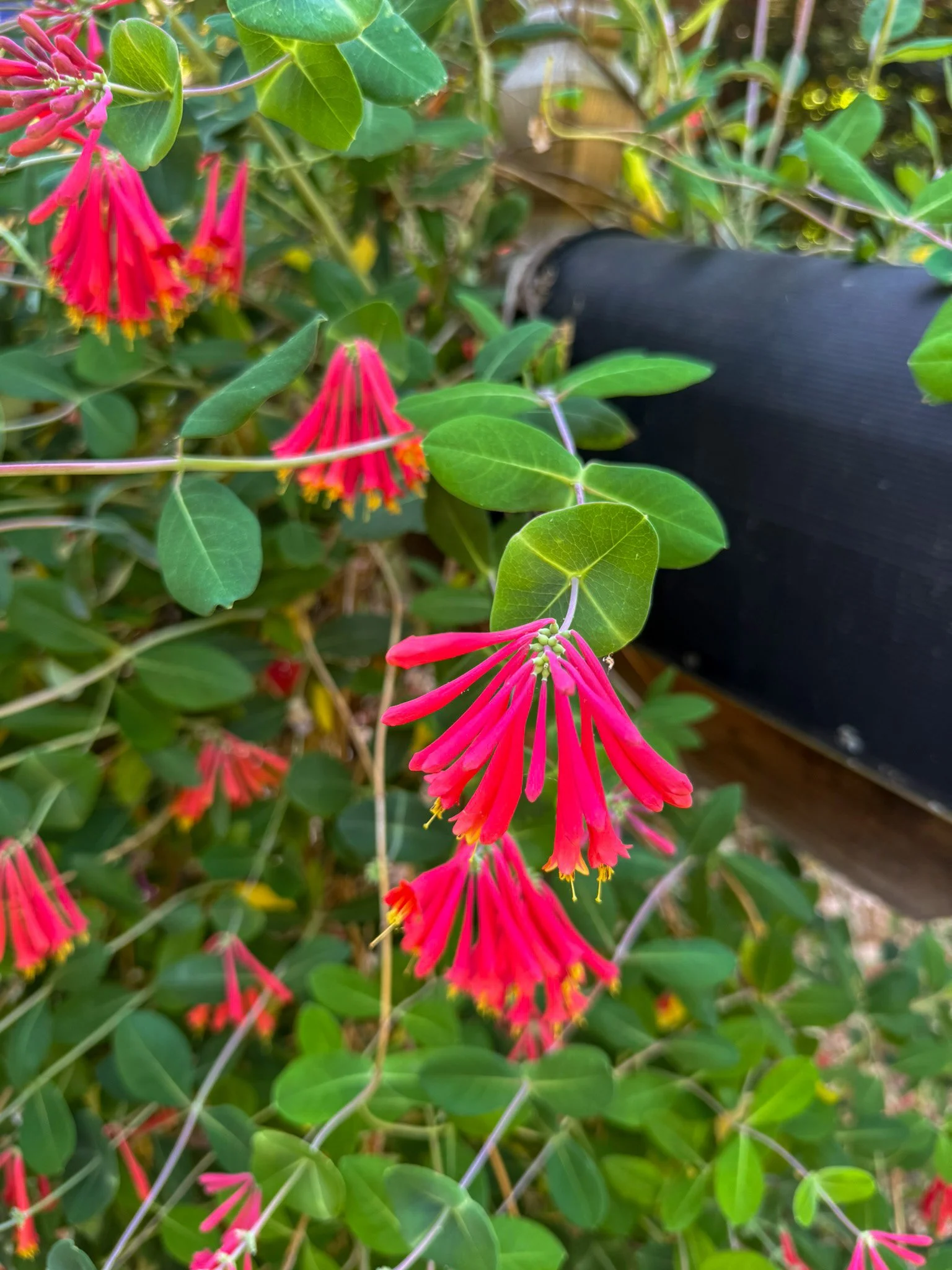
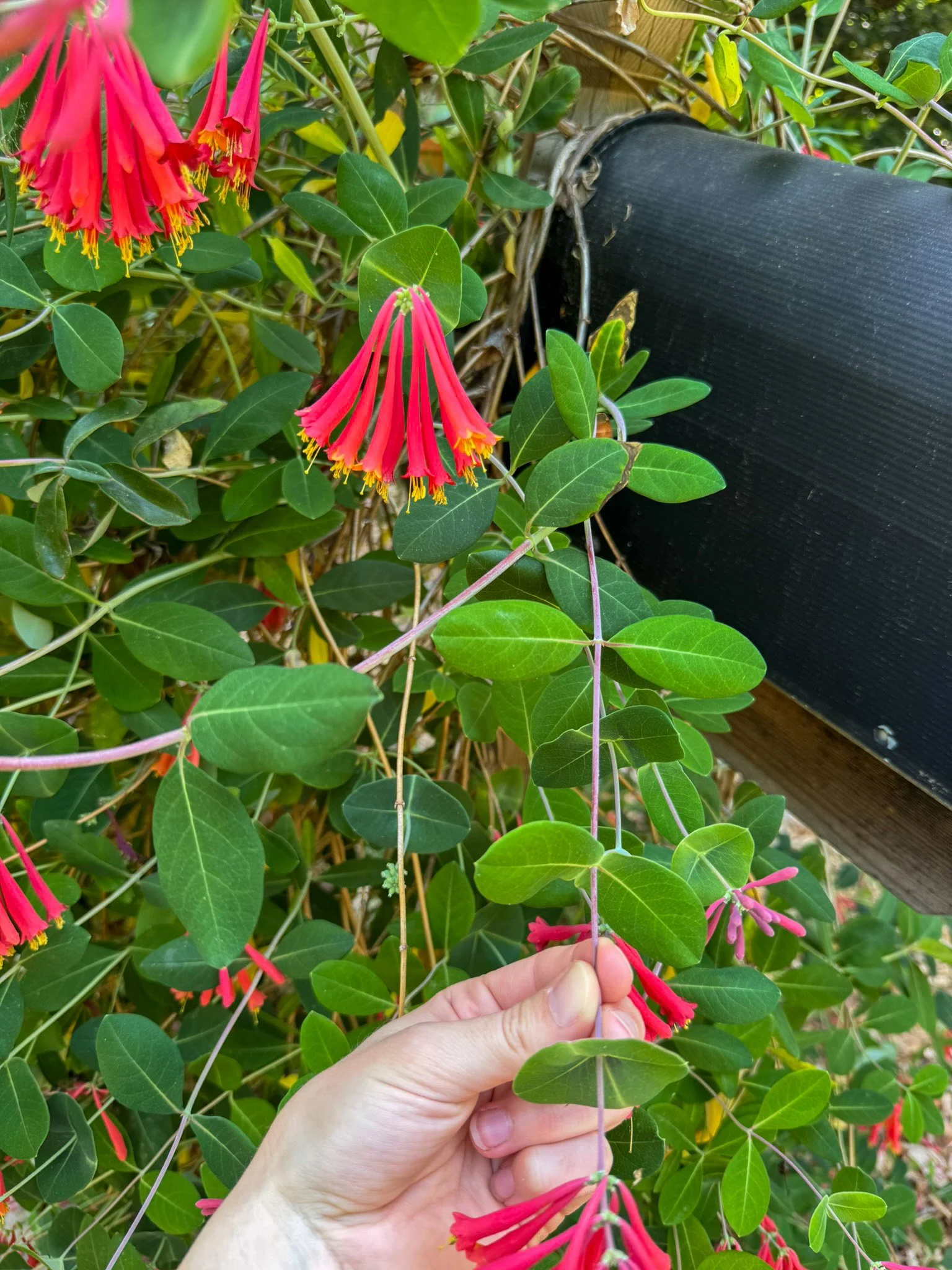
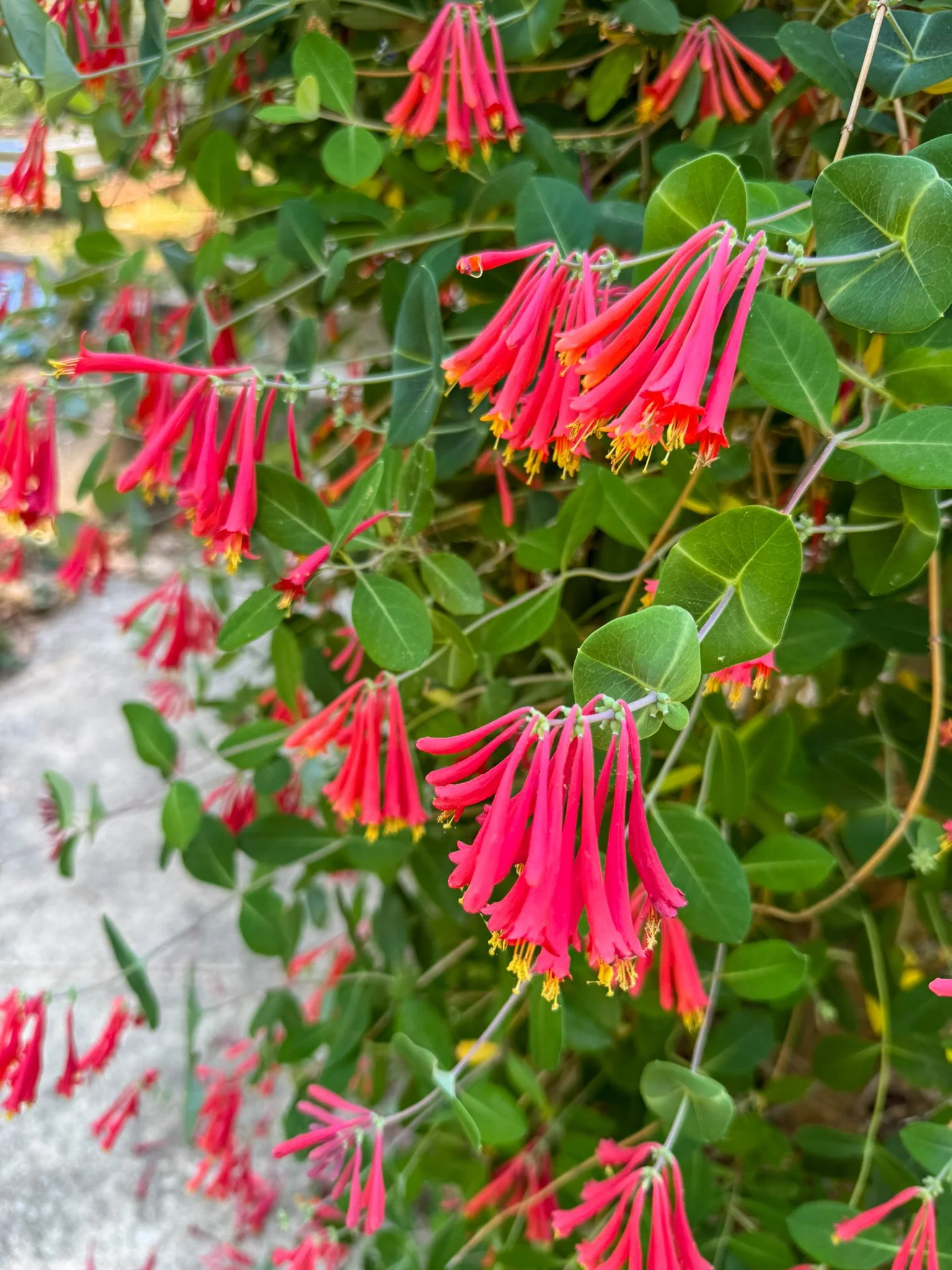
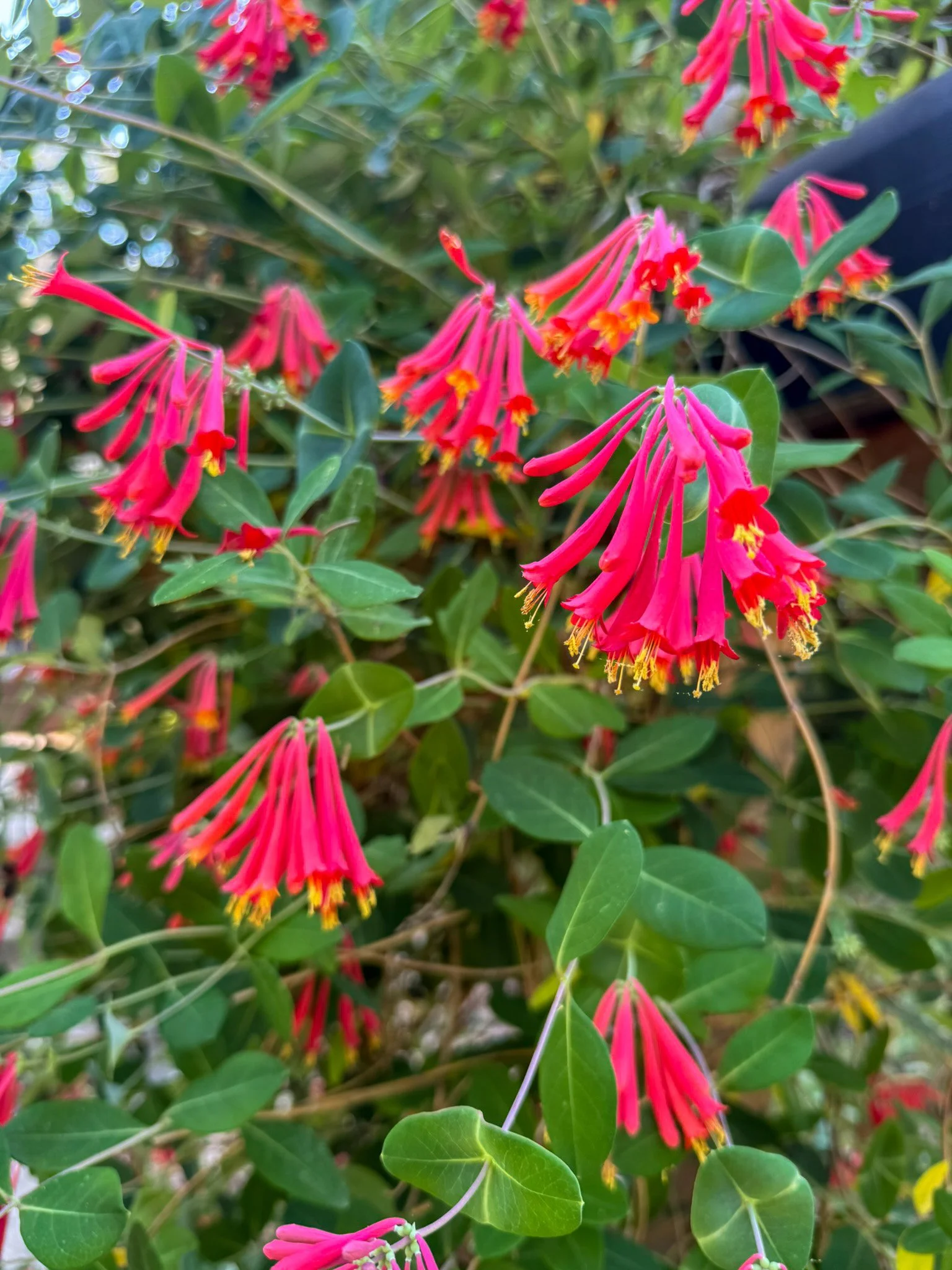
I have long, tubular flowers, with flared petals at the ends. They loosely cluster together at the end of my stems.
Each flower may have a yellow-tinted interior.
My opposite leaves are fused together in pairs across the stem. Each leaf has a rounded to pointed-oval shape, blueish-green color, and smooth texture.
Leaf shape can vary on the same plant and over time.
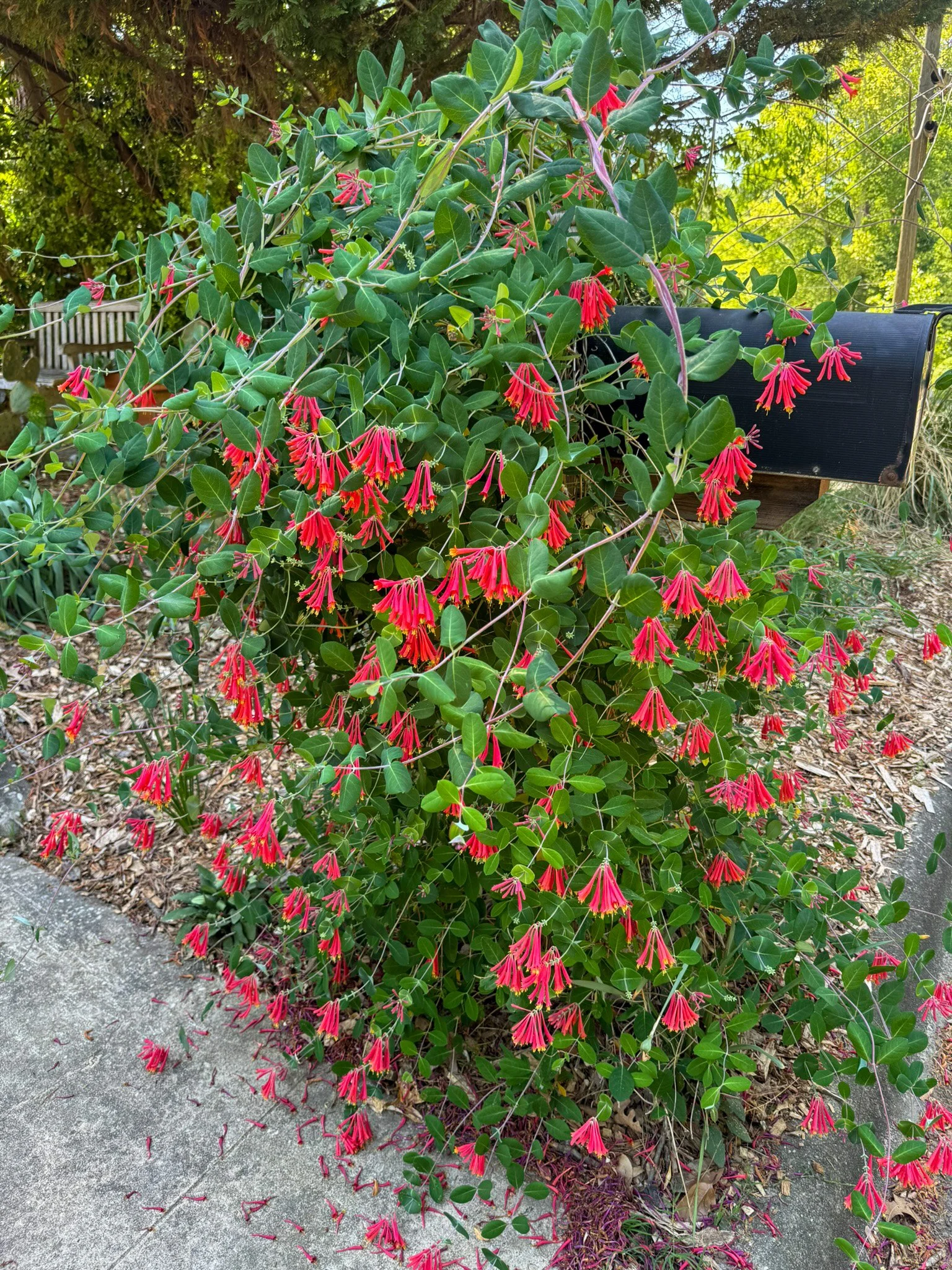
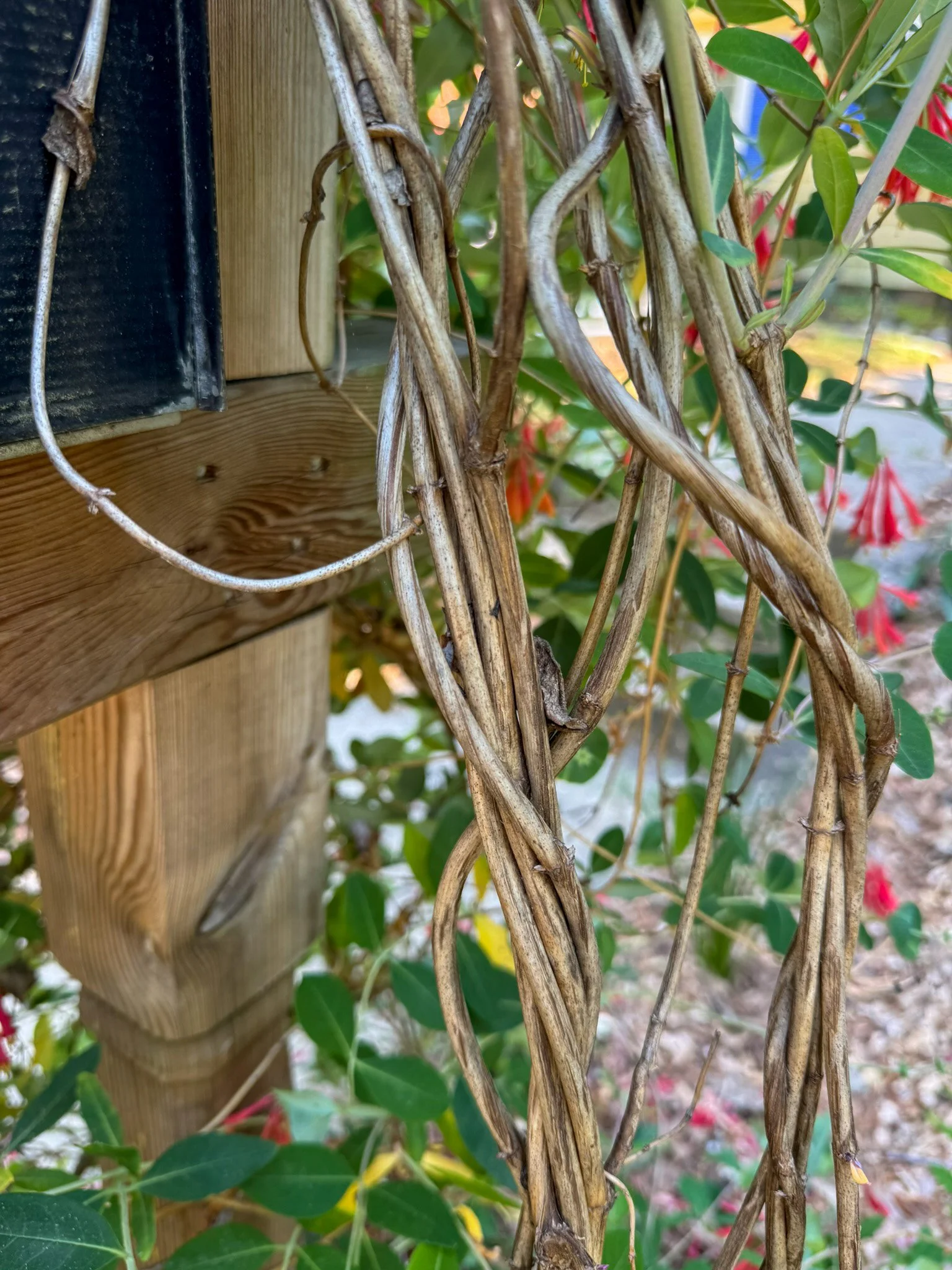
My smooth stems twine up any available support, or crawl across the ground.
I form red berries in late summer to early fall.
How big do I grow?: 8’ - 20’ height (if given a support structure) and 3’ - 6’ spread.
Sun-seeker or shade-lover: Full sun to part shade.
Where I prefer to put my roots: Medium, well-drained soils. I like humus-rich soils and some acidity, and am moderately drought tolerant once established.
Hardiness: Zone 4-9
Original home: I am native to the eastern United States.
Colors: My flowers are typically bright red, but can also be yellow or orange.
When I bloom: Mid-spring.
Wildlife friends: I attract hummingbirds, first and foremost, but may also attract the attention of bees, butterflies, and moths. I am a larval host for a couple butterfly and moth species, and birds enjoy my berries.
Flora Fun Facts: While many vines climb by suckers or tendrils, I climb by twisting my stem around supports. This is called climbing by twining.
More Info: Often seen slumped over fences or climbing a trellis, the Coral Honeysuckle produces vibrant blooms that (in these positions) hang like chandelier crystals, grabbing the attention of passing pollinators.
A member of the Caprifoliaceae (honeysuckle) family. Though I’m related to the invasive Japanese honeysuckle that has invaded parts of the US and Canada, this is a safe native selection.
Also called Trumpet Honeysuckle.
Prune after flowering to regenerate for the following year and control growth.
A great choice for a trellis, fence, or pollinator garden. A fairly vigorous grower.
Salt tolerant.
This plant has been used medicinally for asthma, cough, and sore throat. Chewed leaves were historically used to ease bee stings.