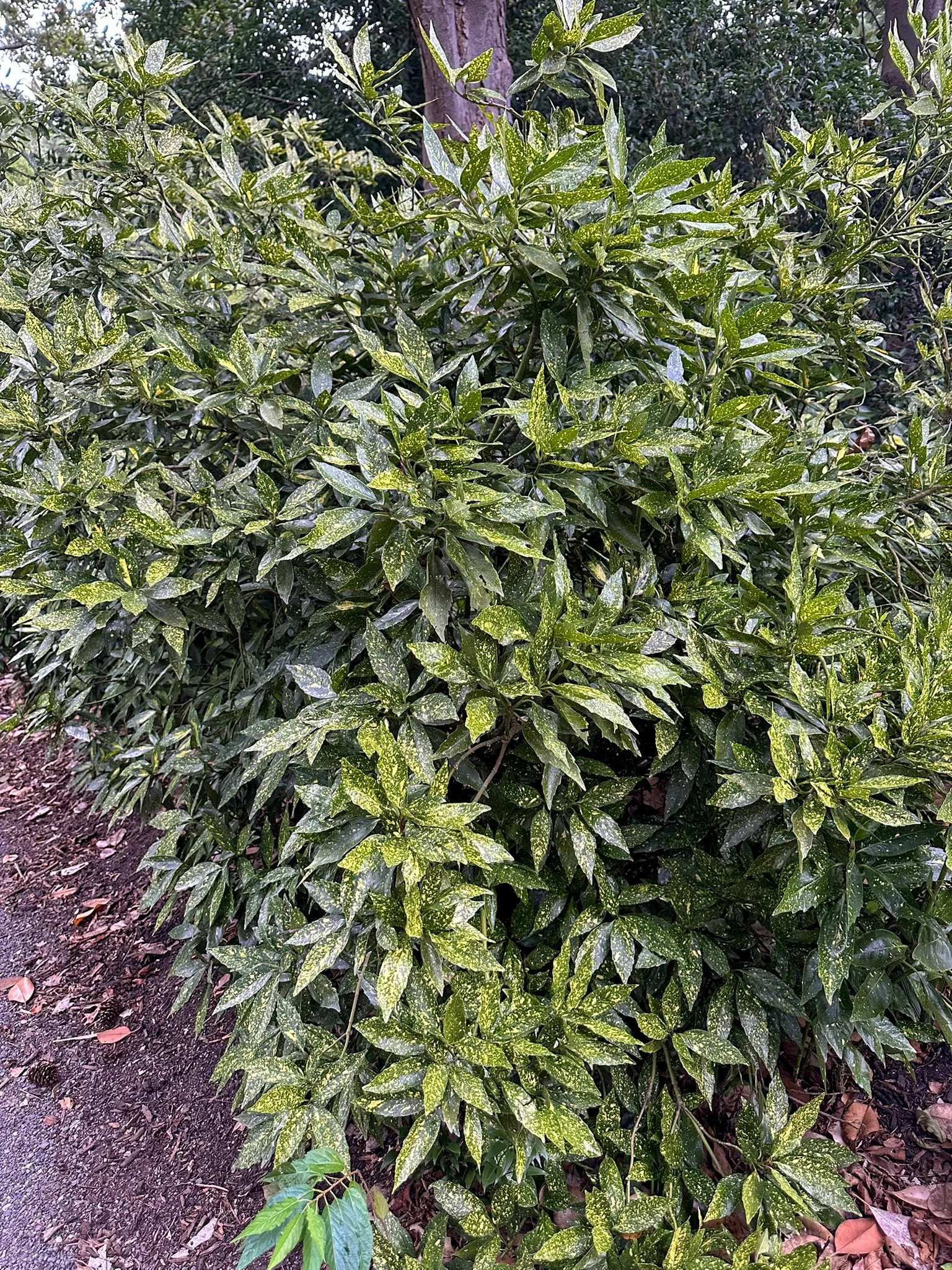
Meet the Aucuba
Aucuba | Aucuba japonica
How do you know it’s me?:
I am a medium-large woody evergreen shrub.
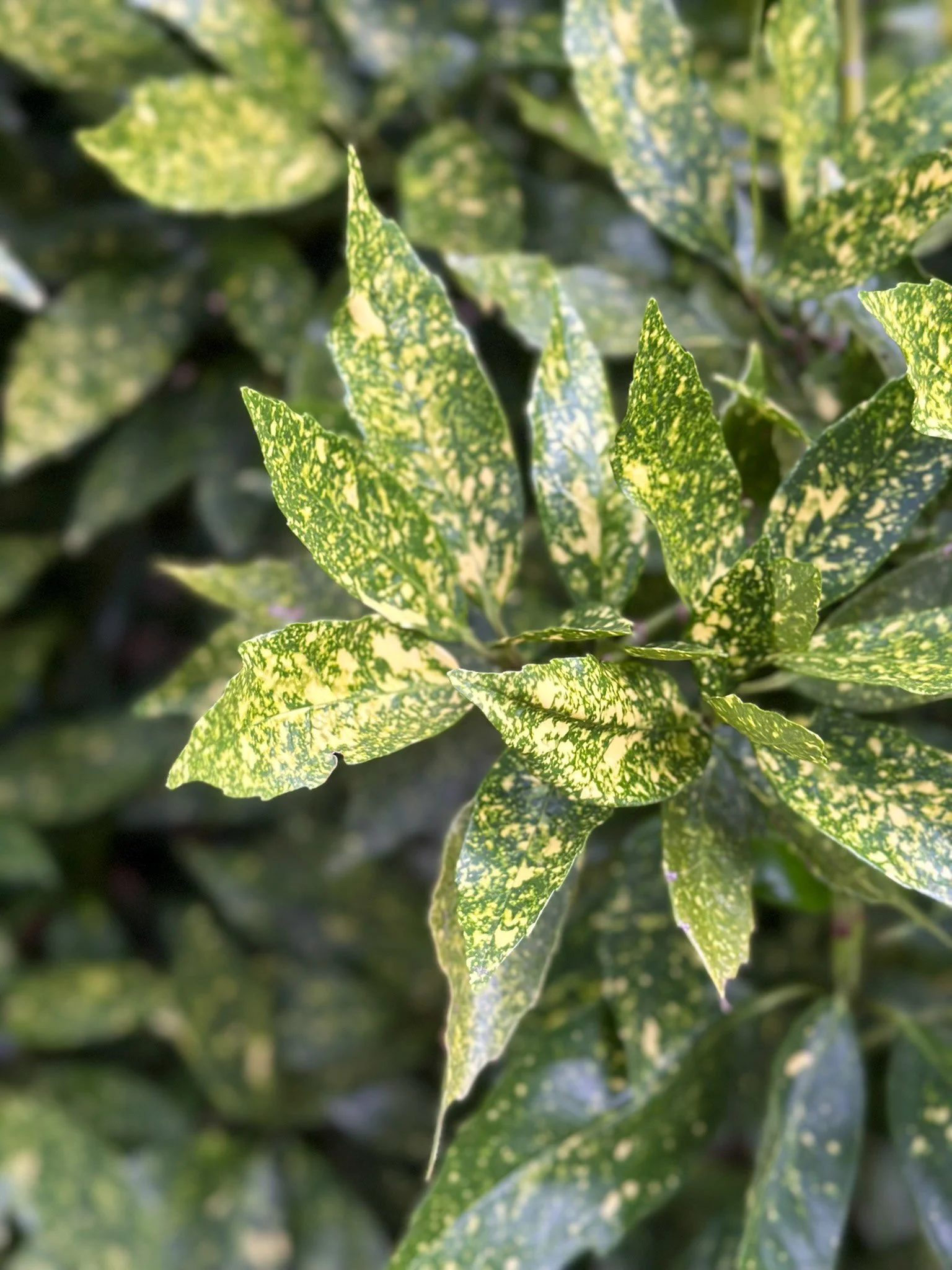
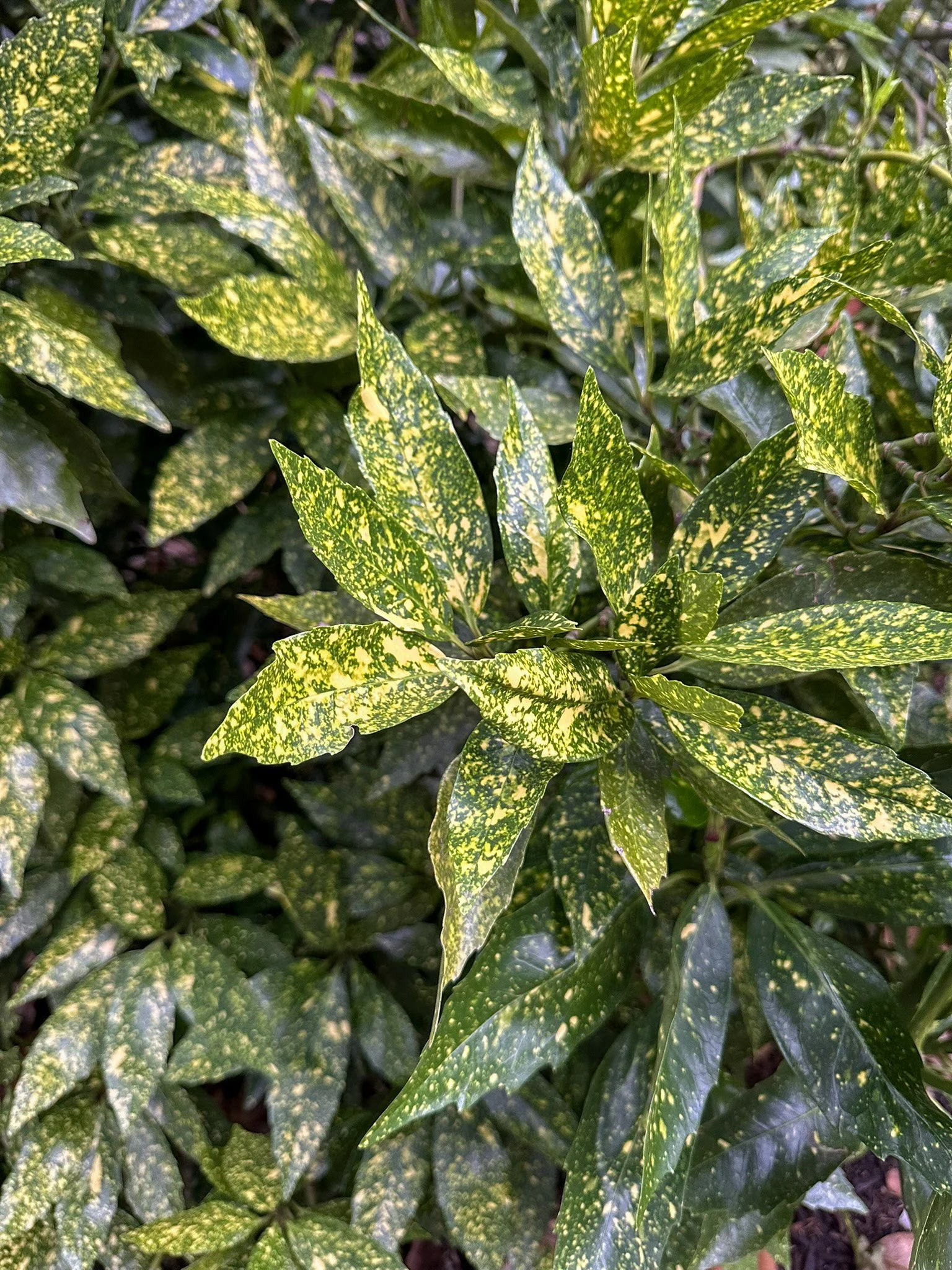
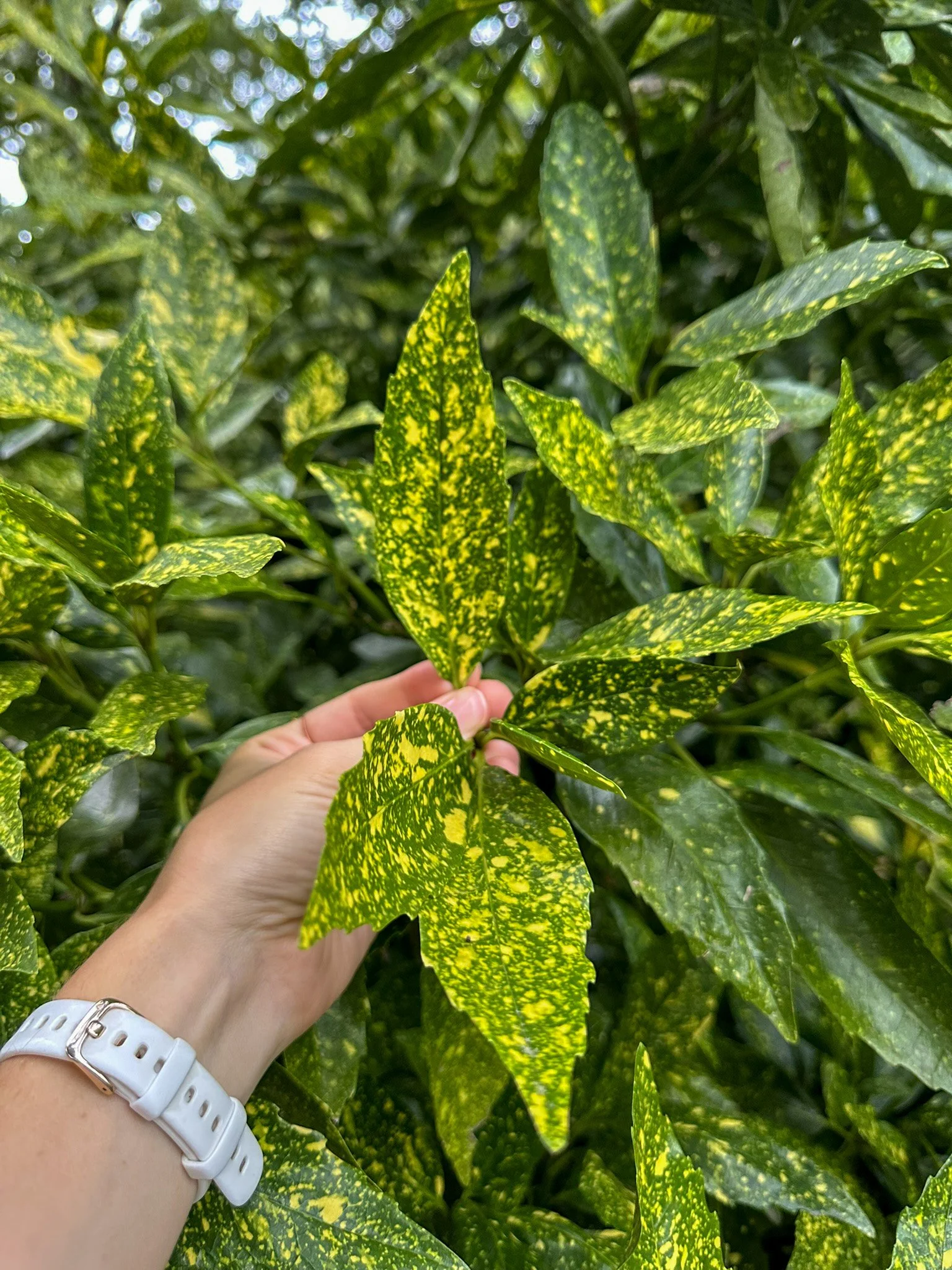
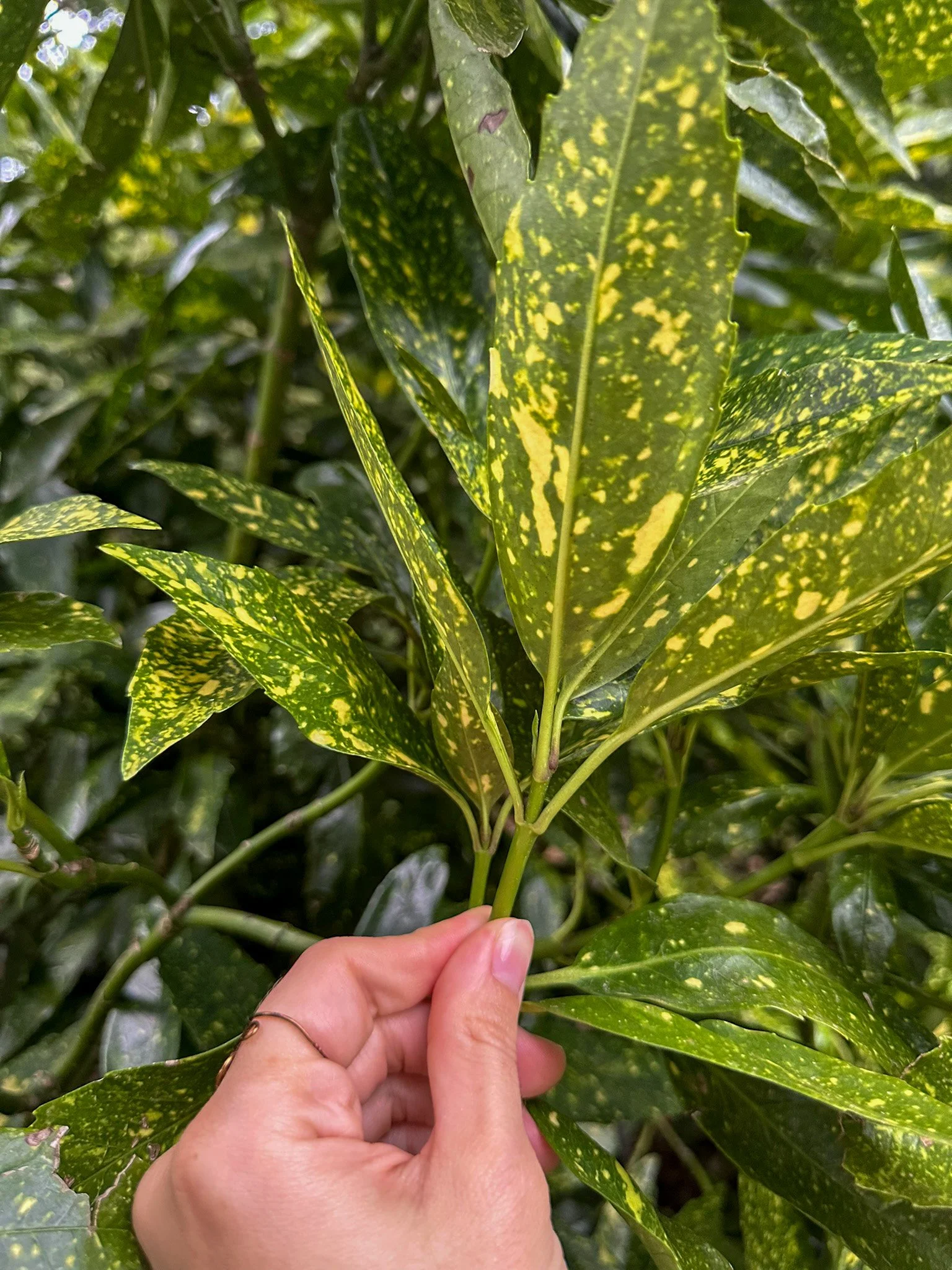
I have long, toothed, pointed leaves that sit opposite one another along the stem. They are a leathery texture with glossy, smooth surfaces.
My leaf color varies by cultivar. Most commonly, I have deep green leaves speckled with yellow, but they can also be solid green, or variegated with large yellow patches.
My stems are smooth and green.
How big do I grow?: 6’ - 10’ height and 4’ - 6’ spread. Dwarf cultivars are a more compact 3’ x 3’ size.
Sun-seeker or shade-lover: Part to full shade.
Where I prefer to put my roots: Well-drained soil. Tolerant of occasional wet and dry soils, and urban conditions.
Hardiness: Zone 7-10, sometimes 6. This can differ between cultivars, and a good mulch layer can help with overwintering.
Original home: I am native to southeast Asia.
Colors: My purpley-red flowers are very small and not a showy feature of the plant. They often come and go unnoticed. The red fruit that follows my flowers are showy and long-lasting, appearing on female plants in fall through spring. I’m most often grown for my leaf color.
When I bloom: Spring.
Wildlife friends: I’m pollinated by small flies, but not particularly attractive to many pollinators.
Flora Fun Facts: This plant is dioecious, so male and female flowers are on separate plants. The female plants will produce showy red fruit in winter, but the small flowers are not very noticeable.
More Info: The Aucuba fills an important role in many urban southern US landscapes, growing in dry, dark places where many other plants cannot survive. Its glossy, colorful, evergreen foliage brings color and a tropical look to these landscapes. The paint-splatter coloration is a unique feature of an otherwise fairly mundane plant.
A member of the silk tassel family - Garryaceae.
Also known by the common names ”Gold Dust Plant,” and “Japanese Laurel.”
Recommended to plant in a protected area on a windy site, as leaves are susceptible to windburn. Too much sun can also be an issue for this plant.
Prune in late winter and early spring.
A good selection for a shady area, rock garden, container, or foundation planting (though many cultivars can get quite large).