Meet the Threadleaf Bluestar
Threadleaf Bluestar | Amsonia hubrichtii
How do you know it’s me?:
I am a small-medium herbaceous perennial.
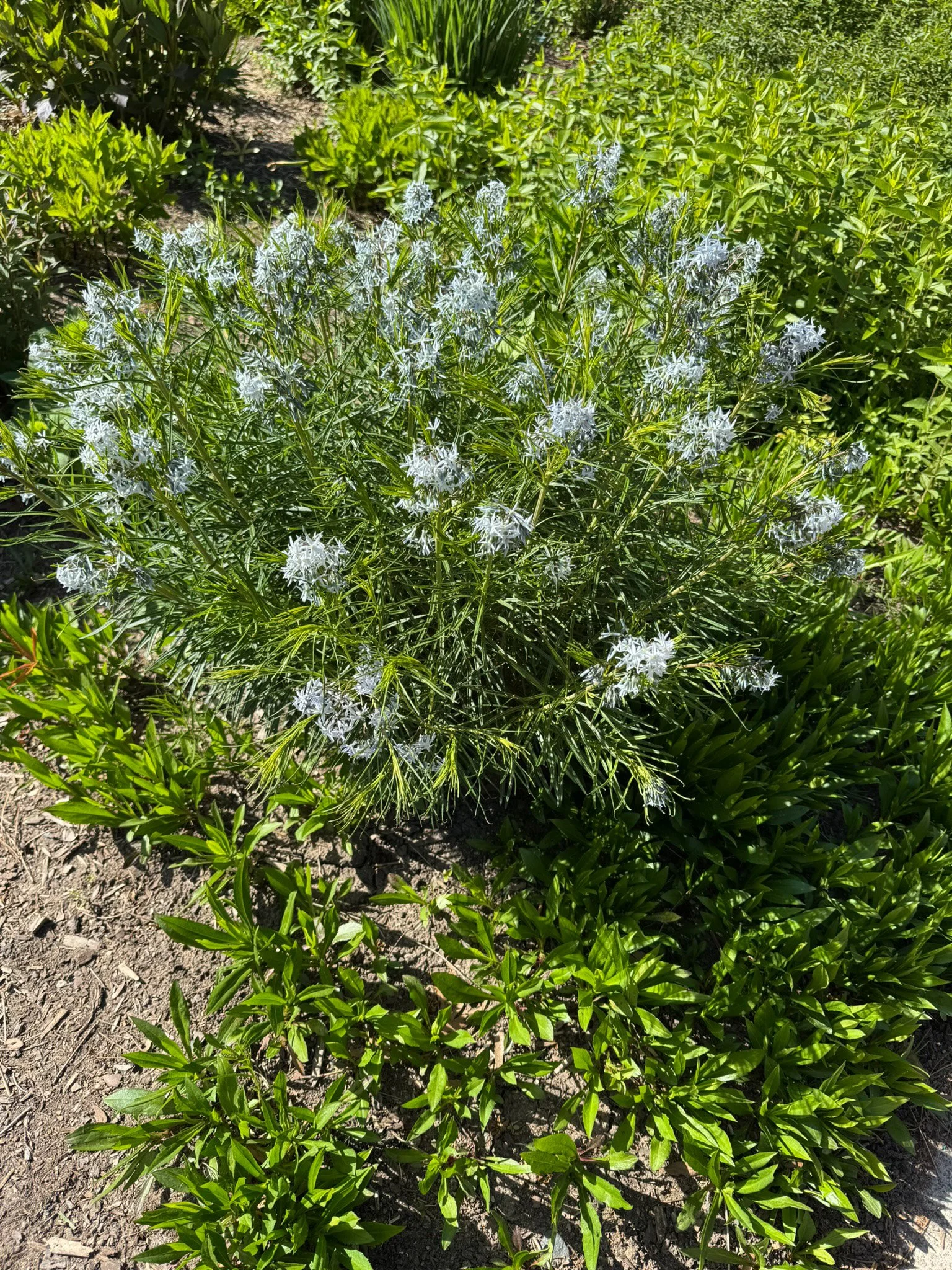
I have a clumping form and a loose, rounded shape.
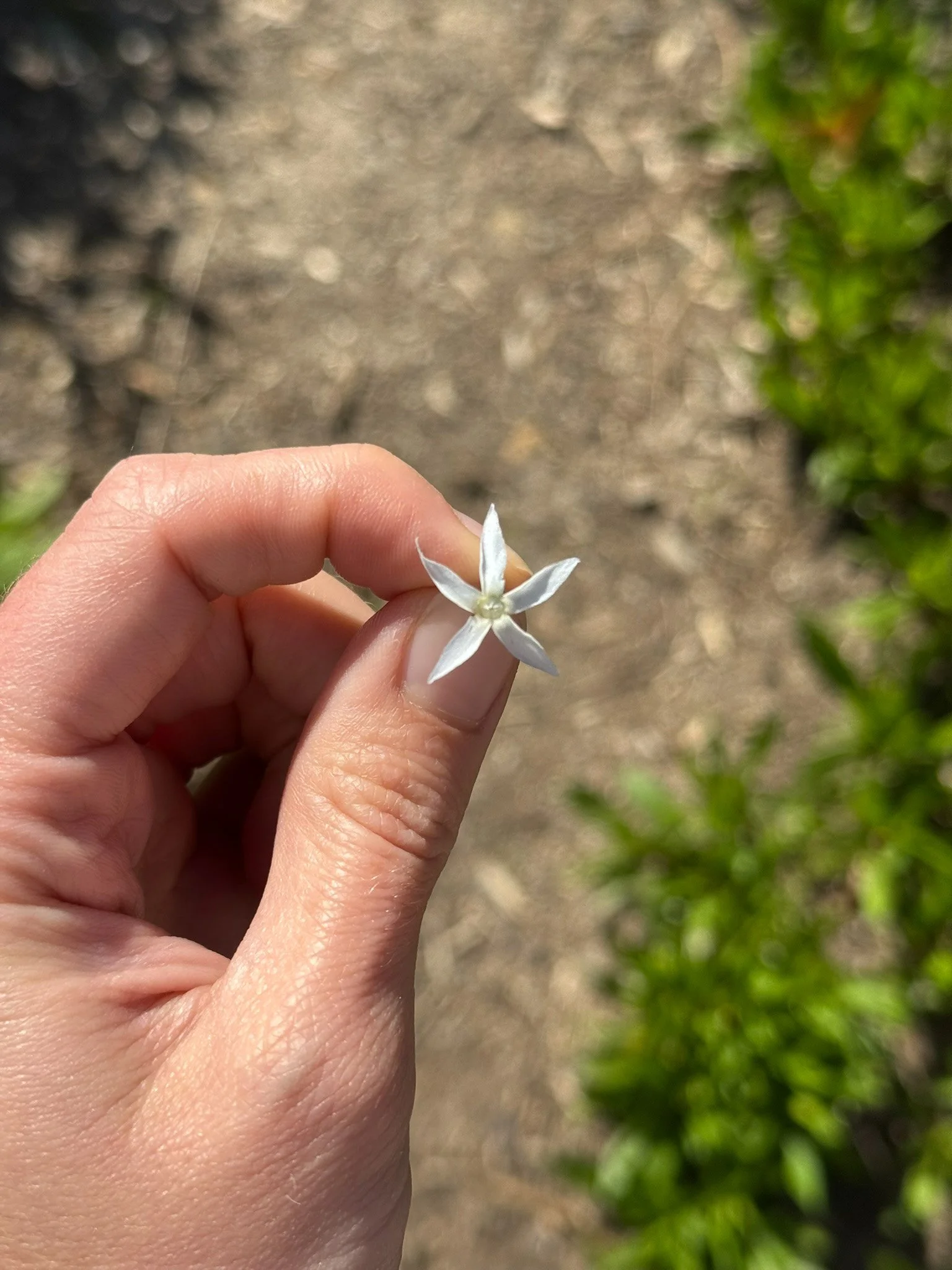
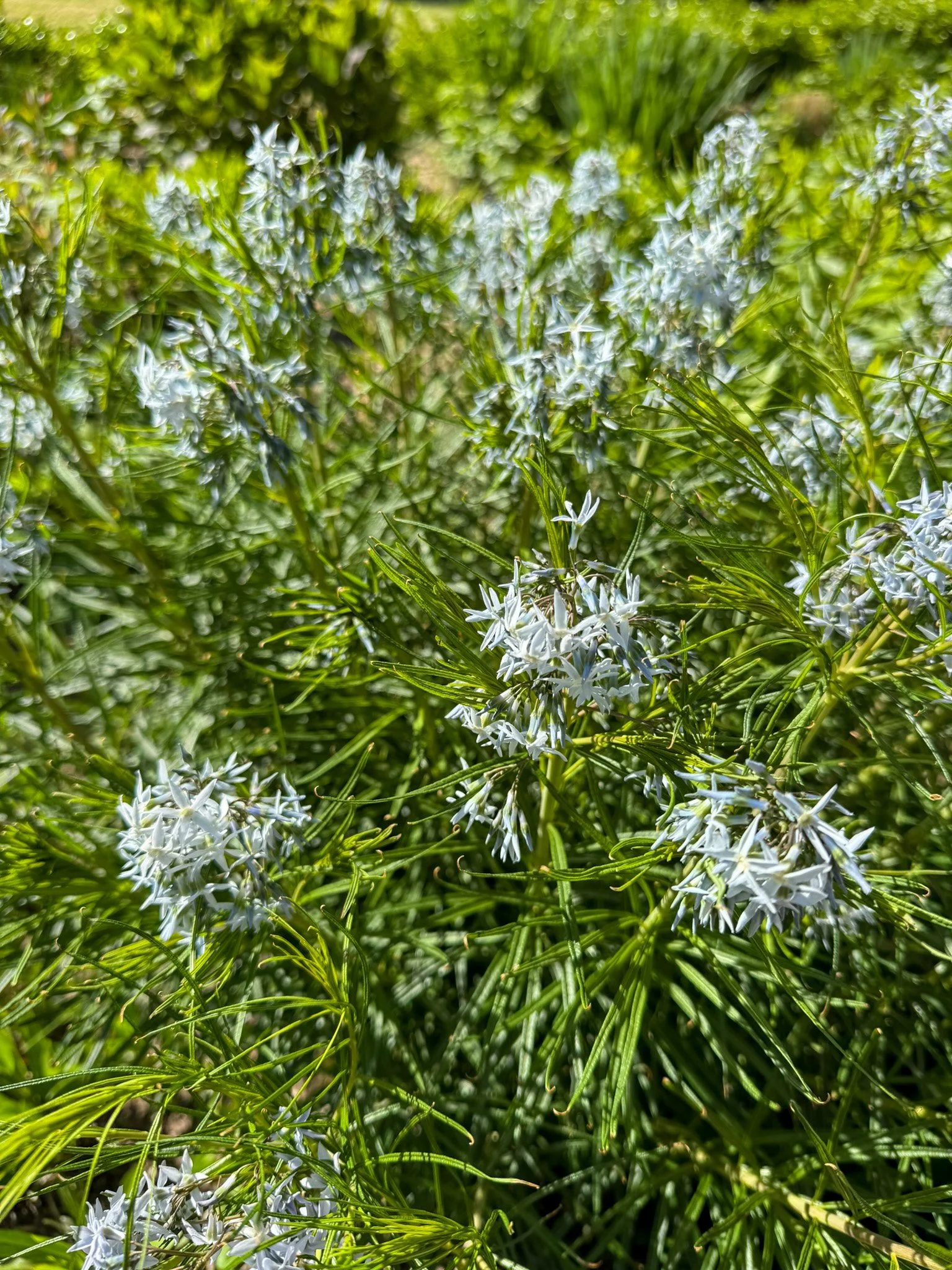
My star-shaped flowers have long, narrow petals and cluster together at the ends of my stems.
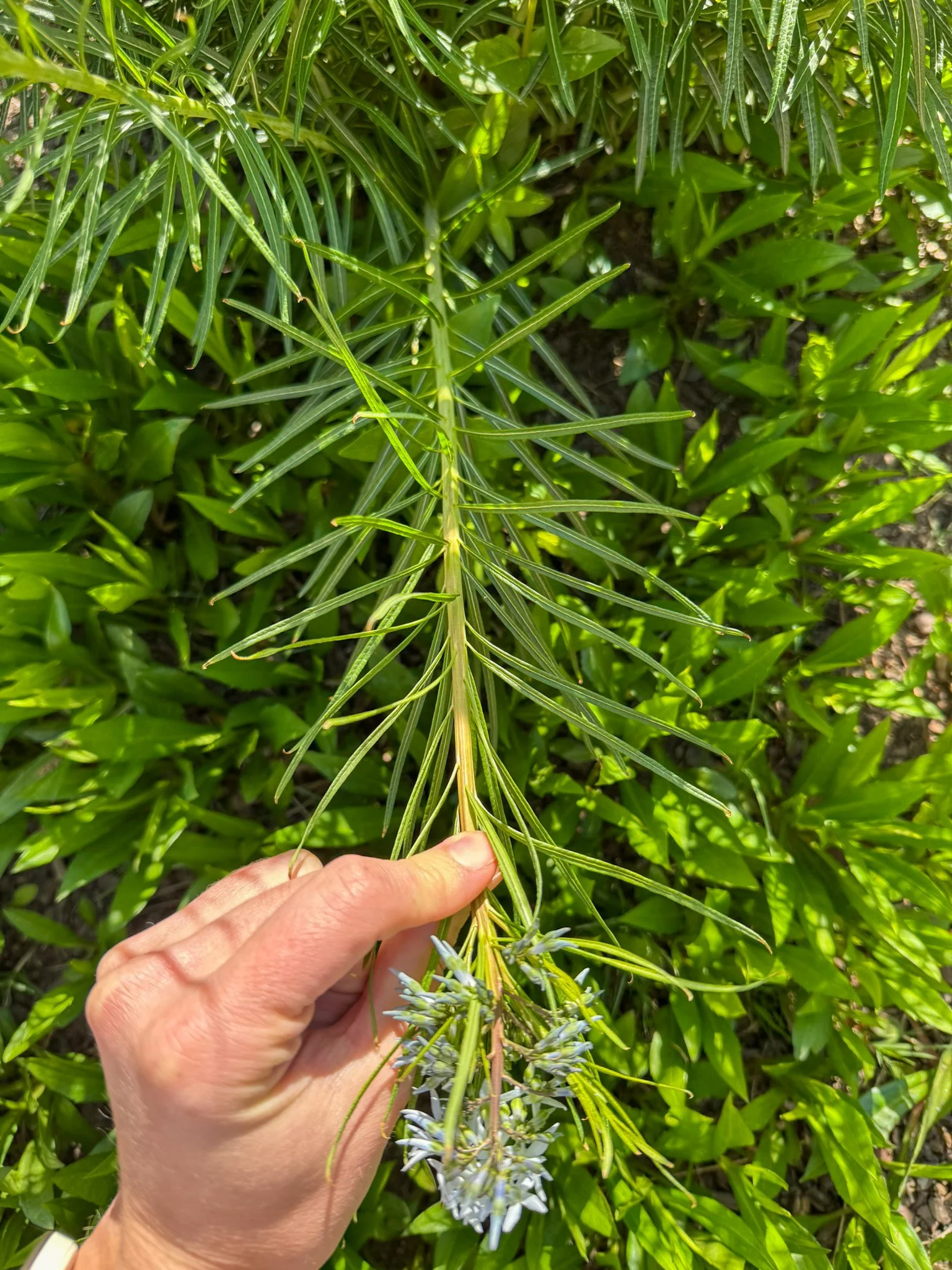
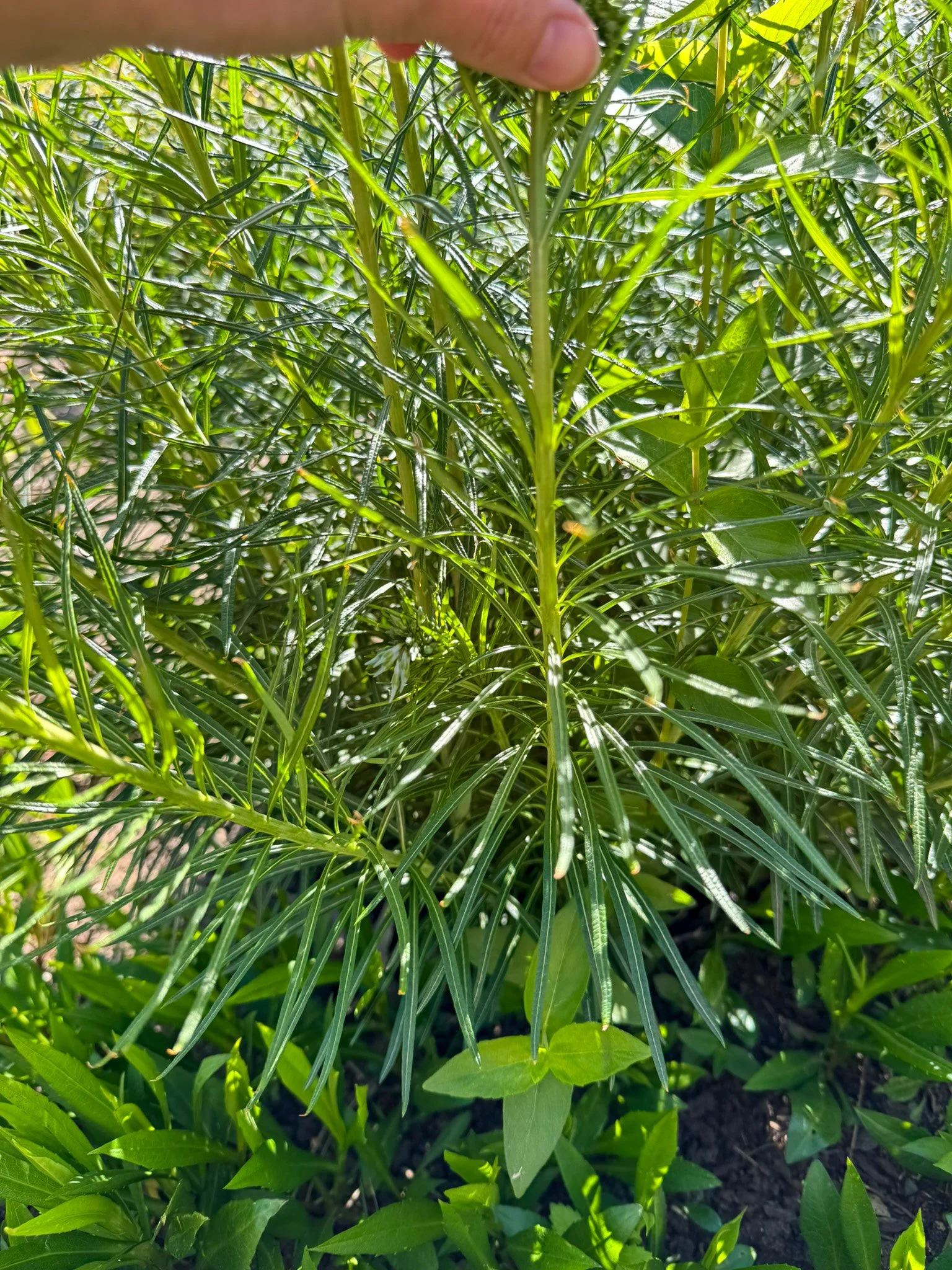
I have alternate leaves that radiate around my stems. Each leaf is 2”-3” long and very narrow (hence my name). The effect is a feathery cloud of foliage.
My stems are smooth, green, and leak a milky sap when broken.
Brown, bean-like pods will form after my flowers are spent.
How big do I grow?: I slowly grow to 2’ - 3’ height and spread.
Sun-seeker or shade-lover: Full sun to part shade, but too much shade will cause me to flop.
Where I prefer to put my roots: Well-drained soil. I am tolerant of drought and poor soils, but do not like wet or too-rich soils.
Hardiness: Zone 5-8.
Original home: I am native to the mountains of central Arkansas and Oklahoma.
Colors: My flowers are blue to white in color. I have a rusty gold fall color.
When I bloom: Spring.
Wildlife friends: I attract butterflies and moths.
Flora Fun Facts: Deer do not like me because of the milky sap in my stems.
More Info: This plant has an unusual look: conifer-like needle leaves that rustle in the breeze and create a golden haze in the fall garden. It is tough once established, and provides color and texture through the spring, summer, and fall seasons.
A member of the Apocynaceae (Dogbane) family (along with milkweeds).
This plant is a great addition to a meadow planting, pollinator garden, or rock garden. The fine leaf texture offers contrast to bolder-textured plants and the bronze fall color creates fall interest as well. It pairs well with grasses and as a mass planting.
It is named after Leslie Hubricht, an American biologist who discovered the plant in Arkansas in the 1940s.