Pitcher Plant | Sarracenia spp.
How do you know it’s me?:
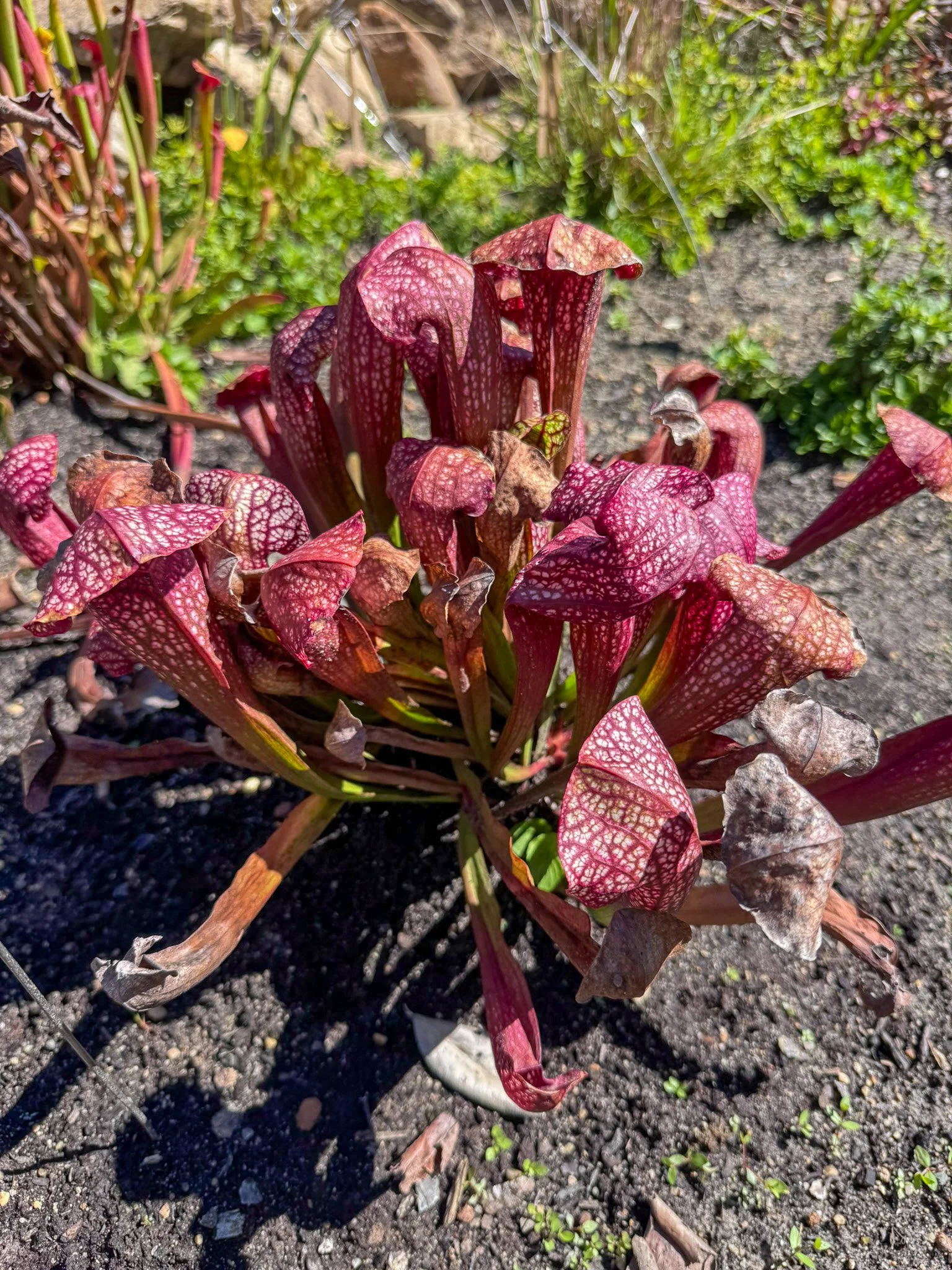
I am a carnivorous herbaceous perennial that grows in clumps.
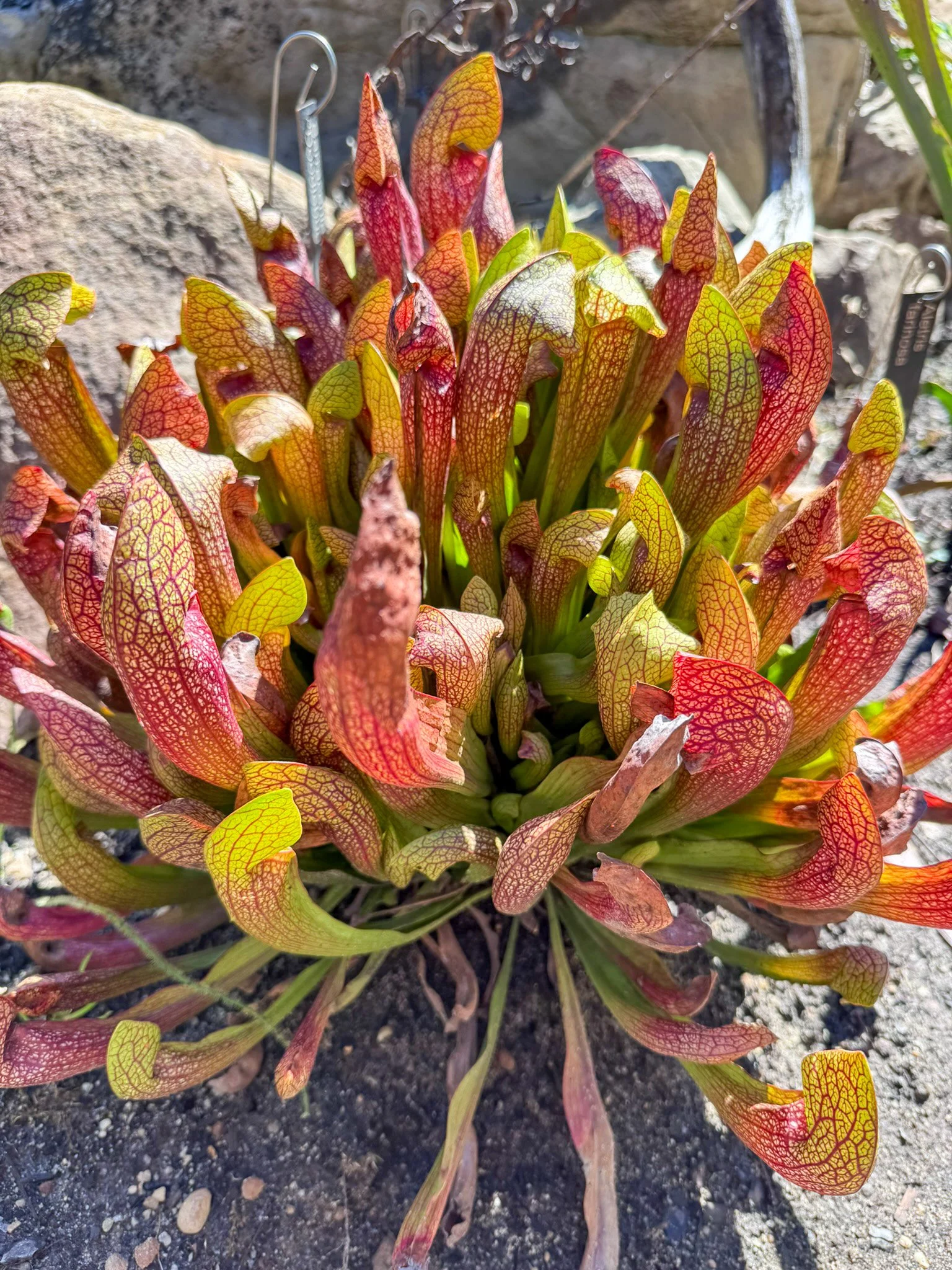
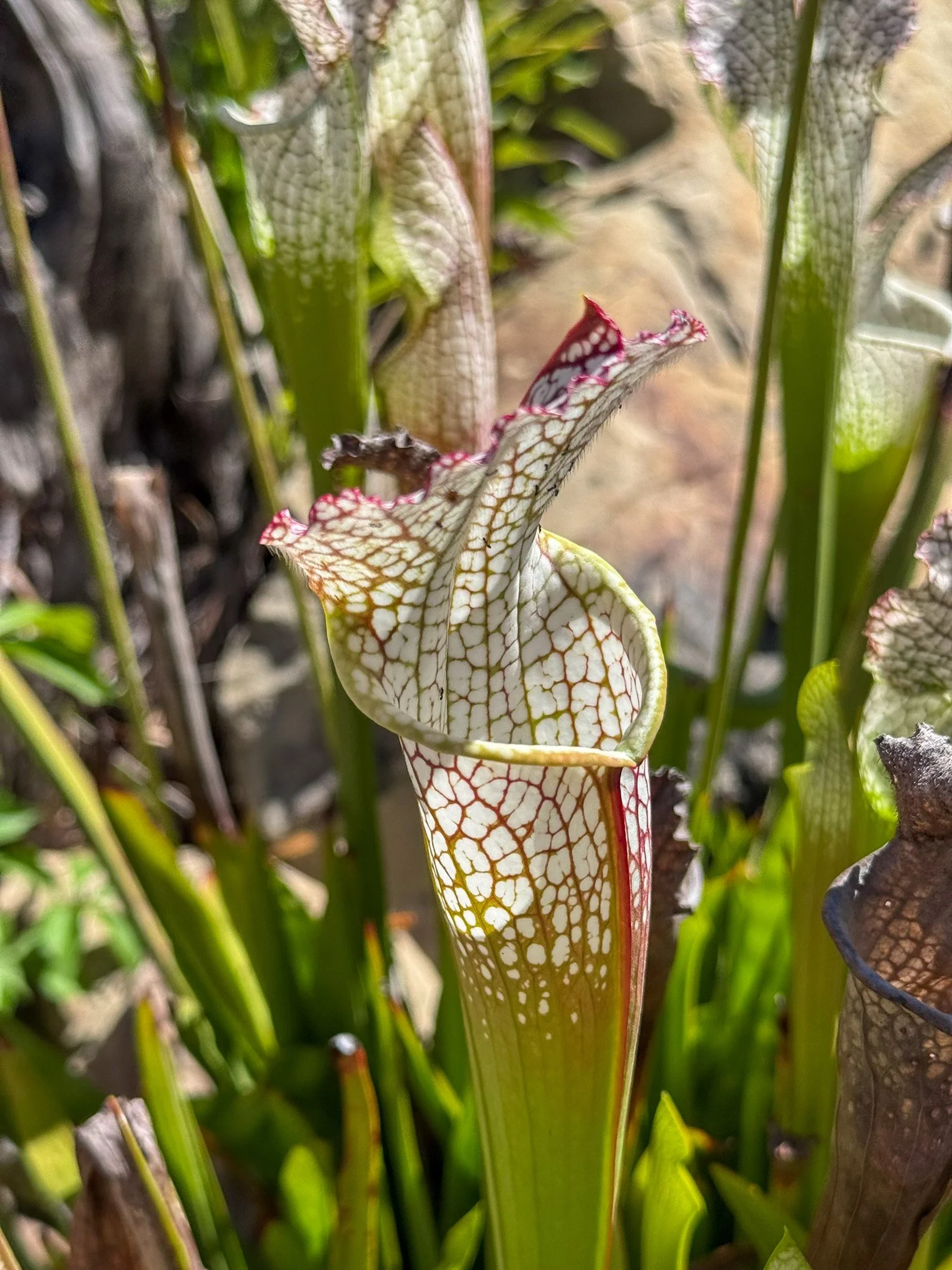
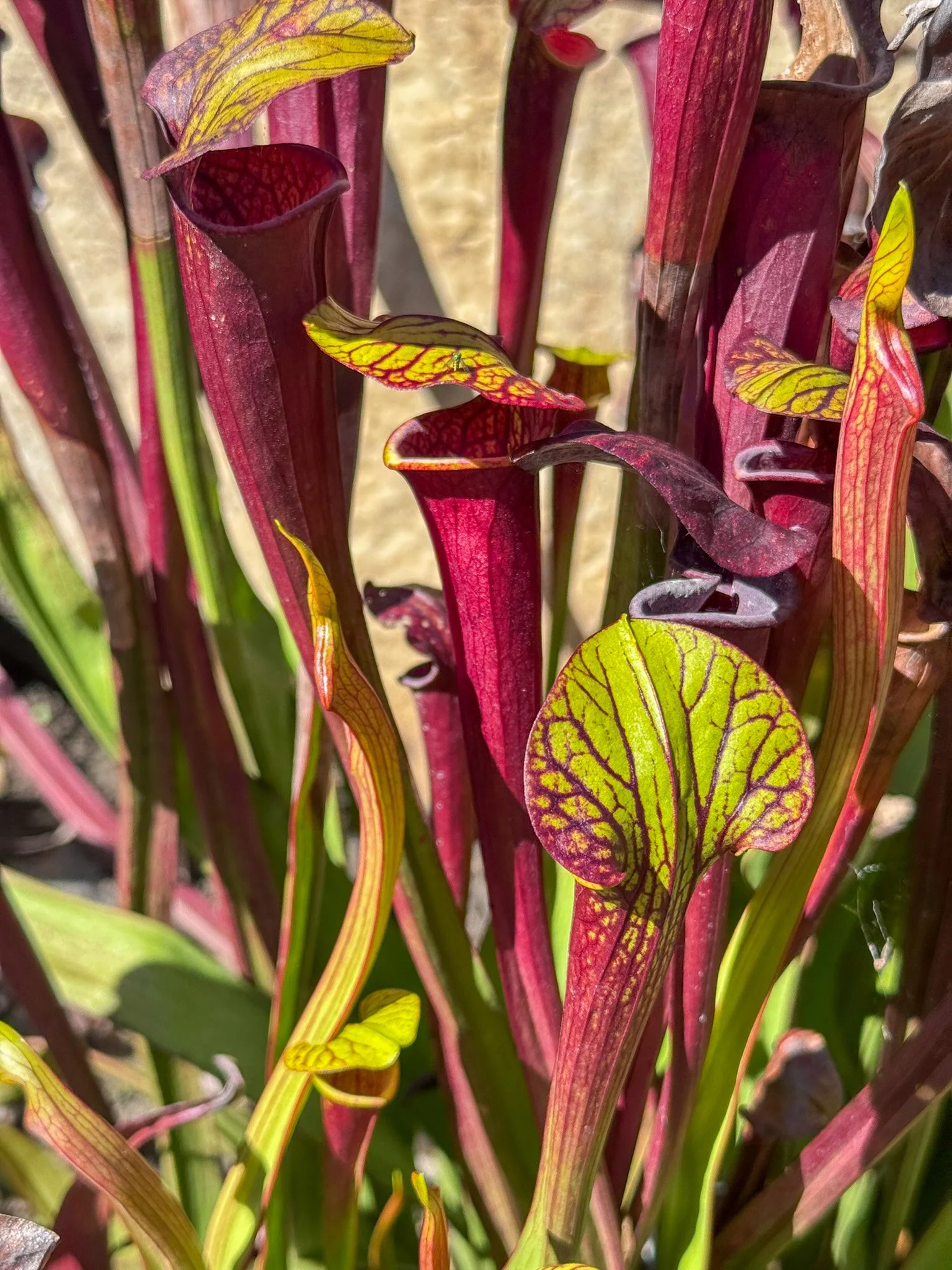
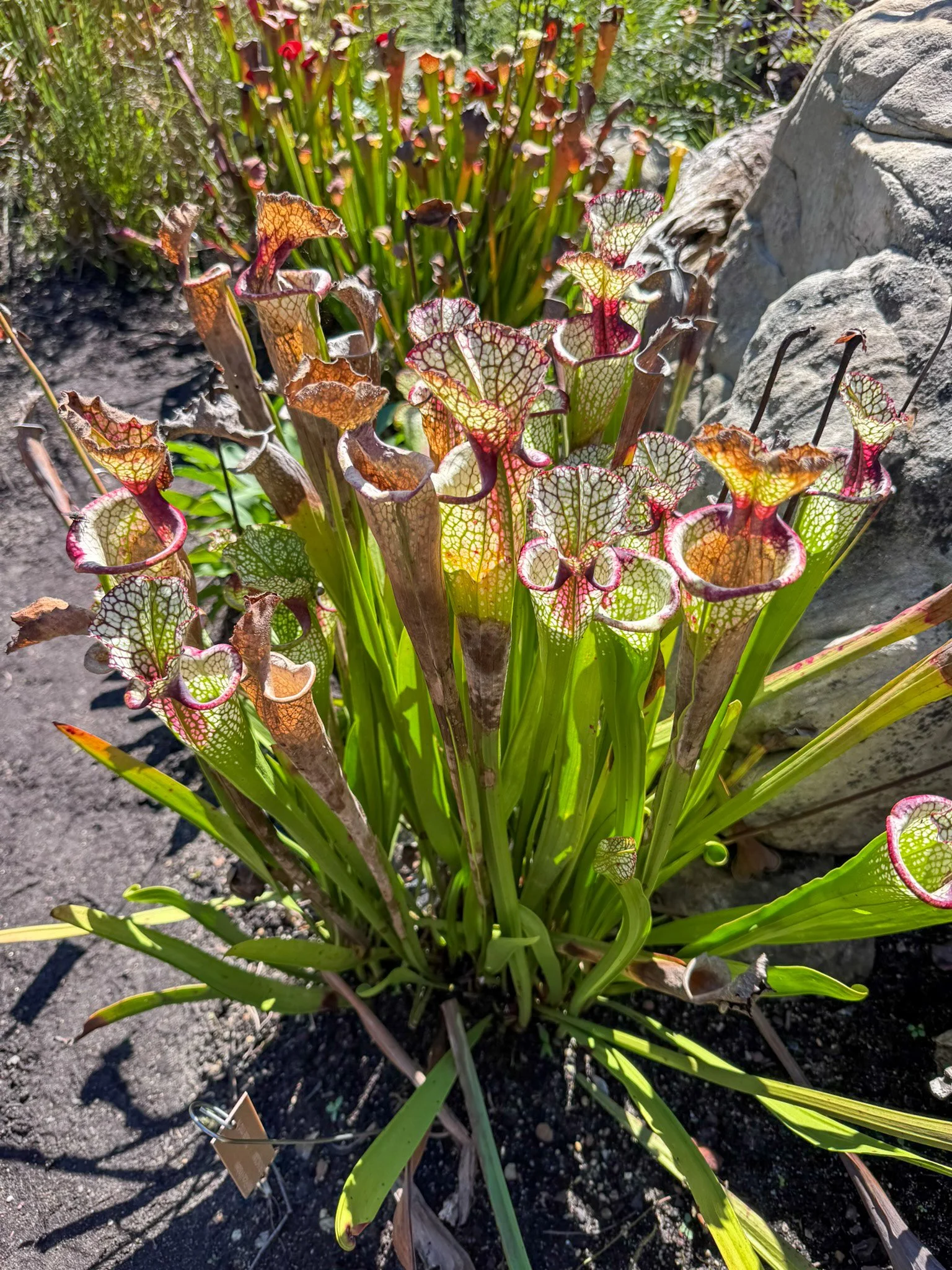
I have a specialty leaf that is shaped like a hollow cone with a hooded top.
I typically have a speckled, or vein-like pattern.
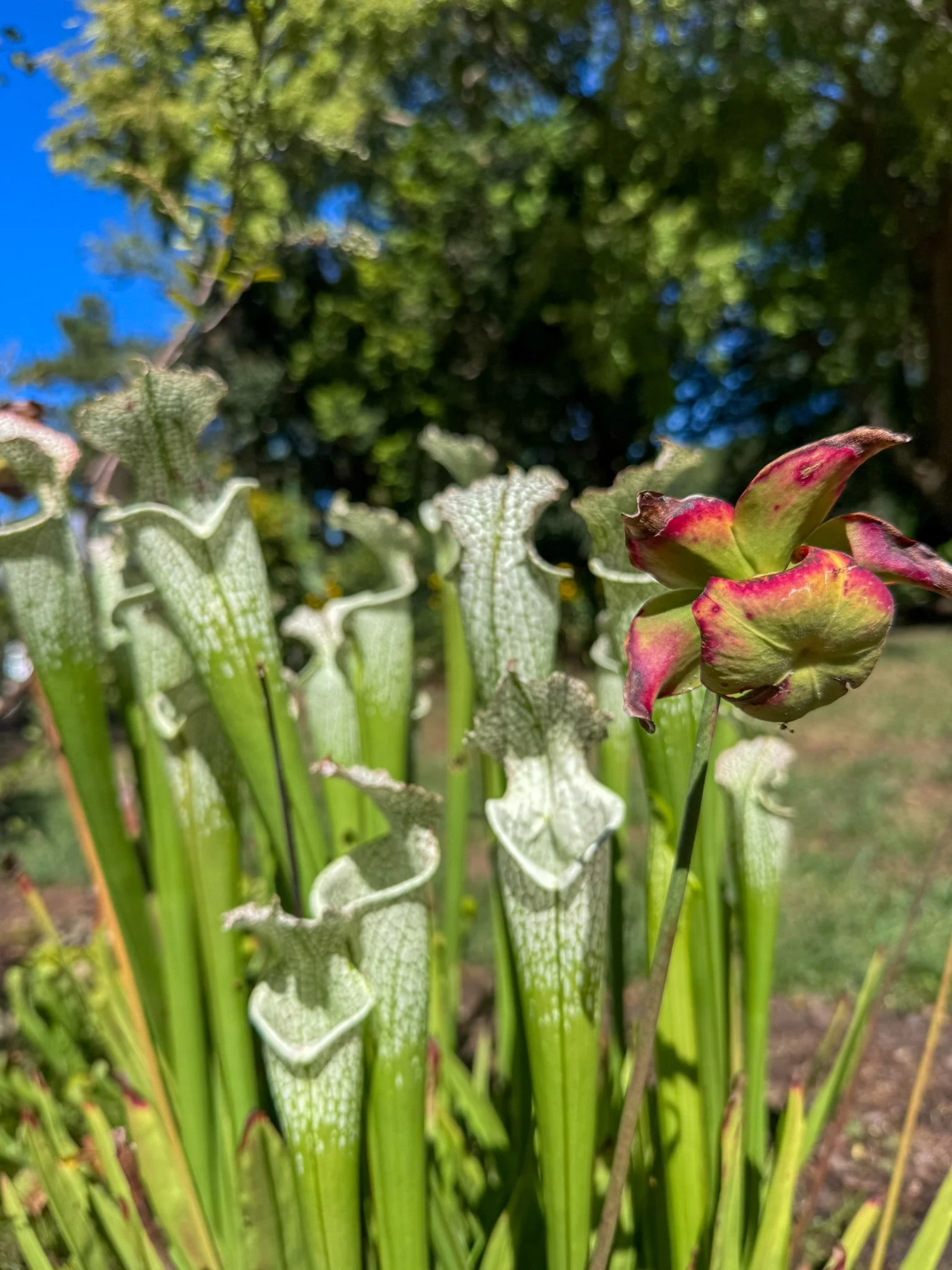
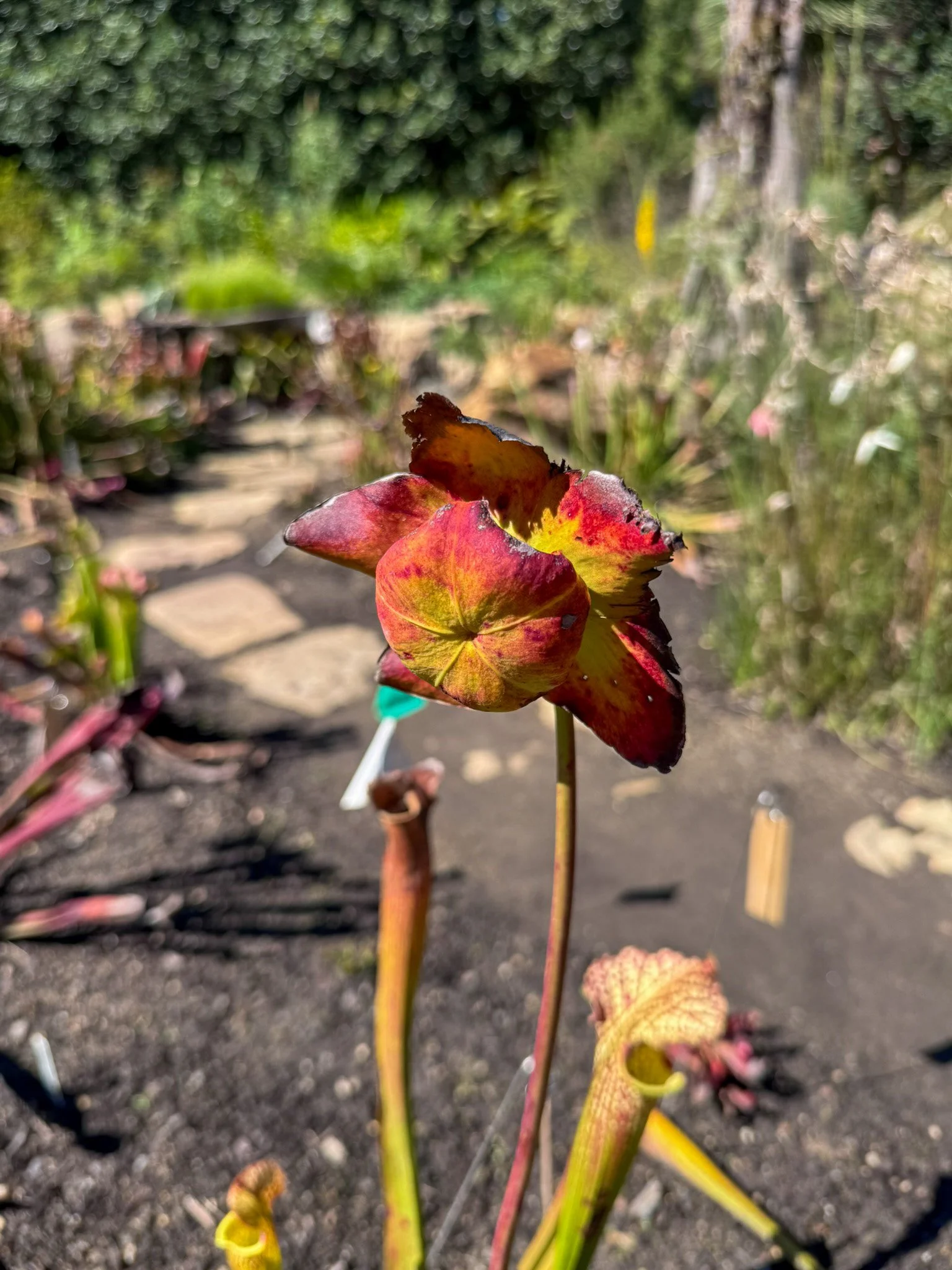
My flower looks like an upside-down umbrella, and sits at the end of a long stalk.
In the fall, the spent flower becomes a showy seed pod.
I secrete nectar around the “neck” of my leaf to draw in insects, which then fall into the “pitcher” where they become trapped. The insects decay and are absorbed as food.
How big do I grow?: 6” - 3’ height and 6” - 2’ spread.
Sun-seeker or shade-lover: Full sun to part shade. The sun requirements are species-dependent.
Where I prefer to put my roots: Moist to wet soils, with high sand content an a more acidic pH. Tolerant of occasional flooding, but should not be treated like aquatic plants.
Hardiness: Zone 6-8
Original home: I am native to bogs and swamps in North America, especially in the southeast United States.
Colors: My flowers and colorful foliage vary from red, pink, purple, white, green, yellow. Most are multi-colored.
When I bloom: Spring.
Wildlife friends: All sorts of pollinators, and other winged insects.
Flora Fun Facts: Many of us are on the endangered species list, while others are on the threatened list. Our naturally-occurring populations are threatened by habitat loss, development, and over-picking. Do not harvest a pitcher plant from the wild!
More Info: An unusual plant with several species native to the United States, you would expect to see this trap-like plant on another planet…or in a horror movie!
A member of the Sarraceniaceae family (the Pitcher Plant family).
This plant goes by many common names - “Frog Britches” and “Huntman’s Cup” among them.
The “hood” serves to prevent captured prey from escaping or preventing the pitcher from filling with too much water.
The interior liquid of some of these plants acts as a safe haven where some mosquito and midge larvae can live without being digested by the plant.
They are sensitive to fertilizers and chlorinated water. For container plants, use rainwater or distilled water.
The flower stalks appear before the pitchers are fully formed, and reach well above the leaves so pollinators can access the blooms without getting trapped.
Pitcher plants go into a dormant period from fall until spring, when the foliage turns brown. It’s best to remove last season’s foliage in the spring.
Best grown in bog gardens, but can be kept in containers, terrariums, or as an indoor houseplant. Moist conditions must be maintained for the plant to succeed. If kept indoors, they still require a winter dormancy period. Purchase from a reputable plant nursery, and do not harvest this plant from its natural habitat. Pitcher plants do not need to be “fed”….they’ll do just fine on their own!